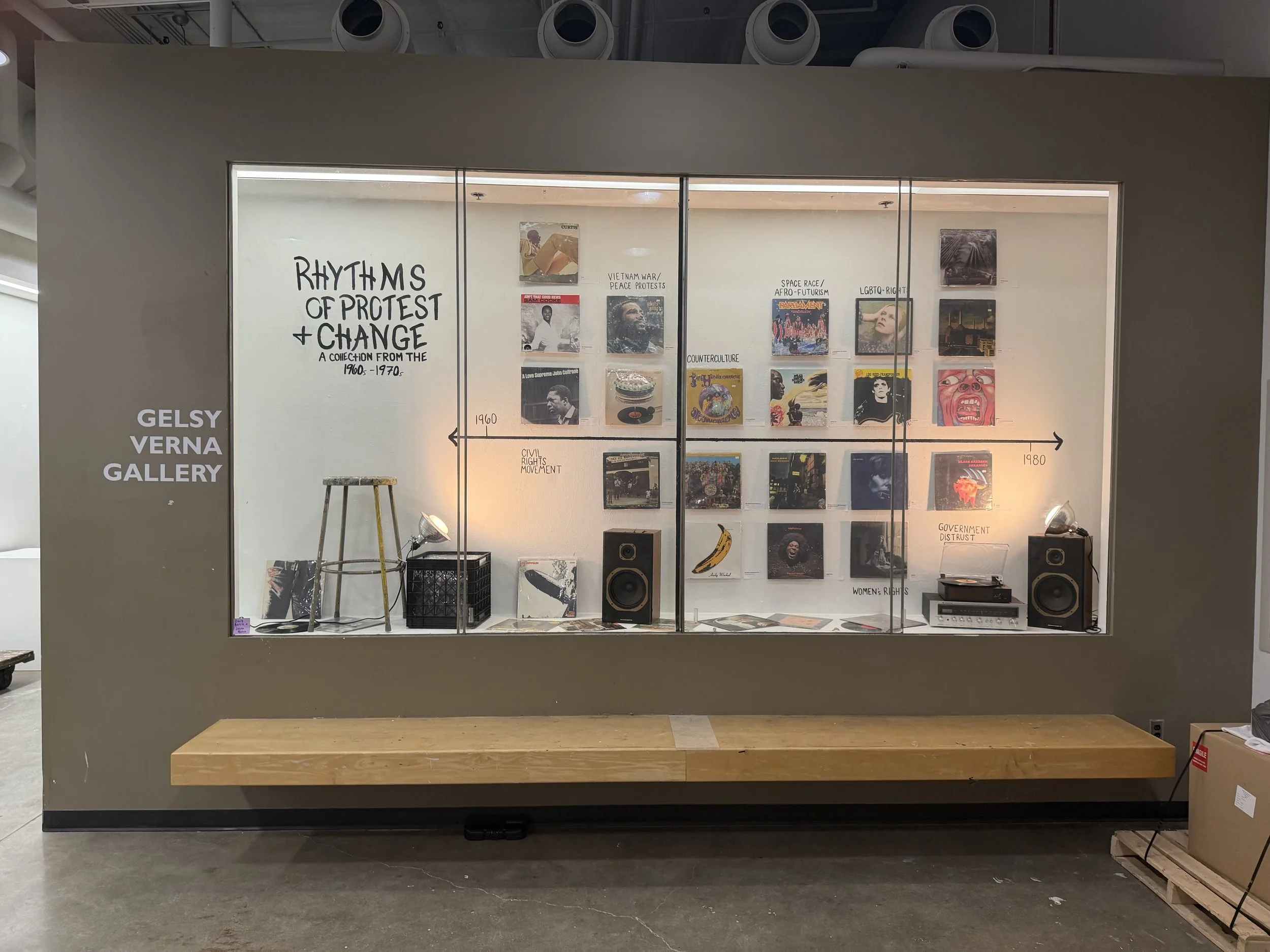
Rhythms of Protest & Change: A collection from the 1960s and 1970s
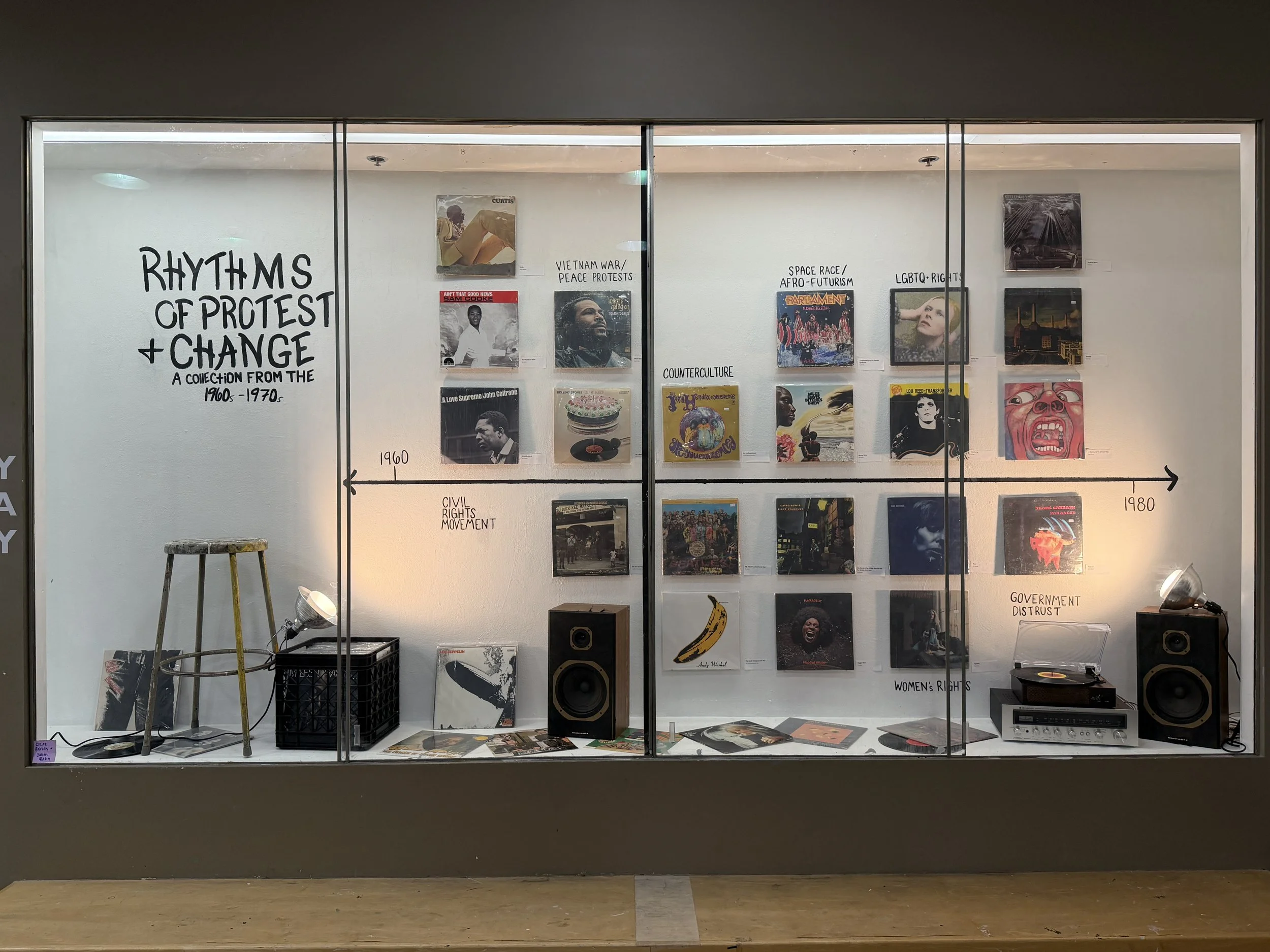
The decades of the 1960s and 1970s endured unprecedented cultural trouble and hardship. This continuous social disruption inspired musical innovation, where artists transformed recording studios into spaces for experimentation and resistance. From civil rights struggles to space-age dreams and anti-war demonstrations to demands for gender and sexual liberation, musicians didn't simply take on the role as songwriter or artist. Instead, they produced symbols of defiance born at the intersection of hope, curiosity, and vexation.
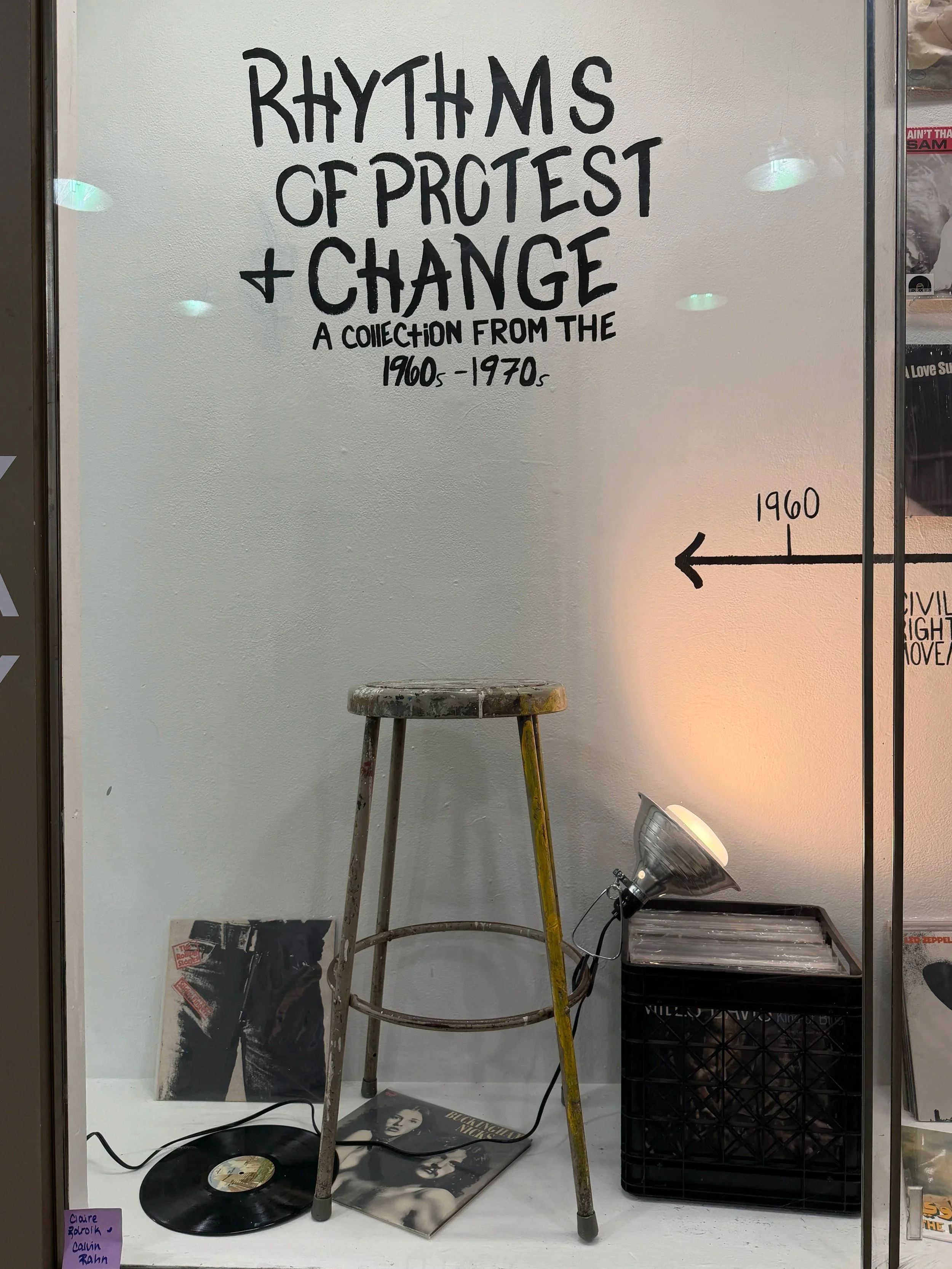
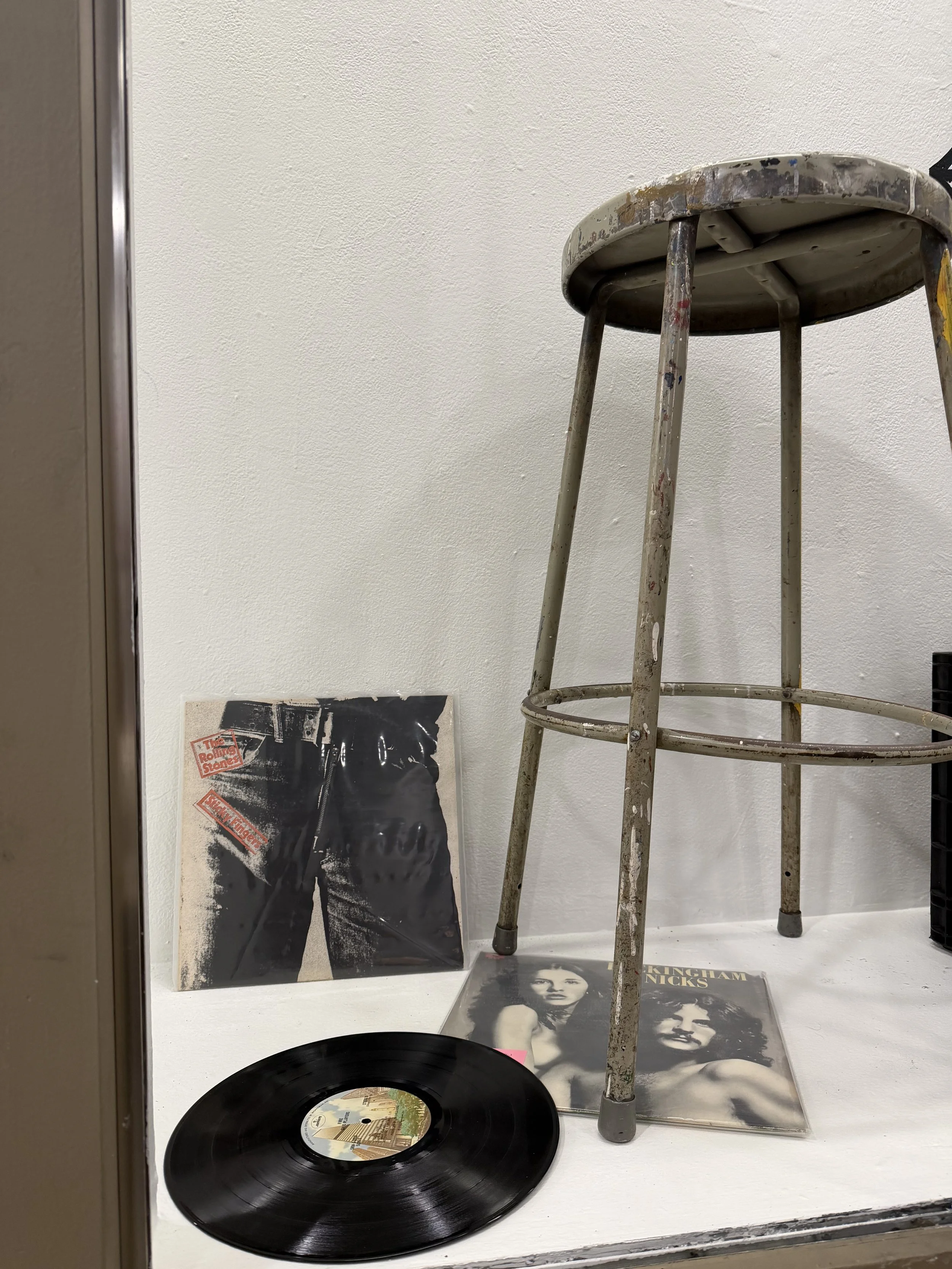
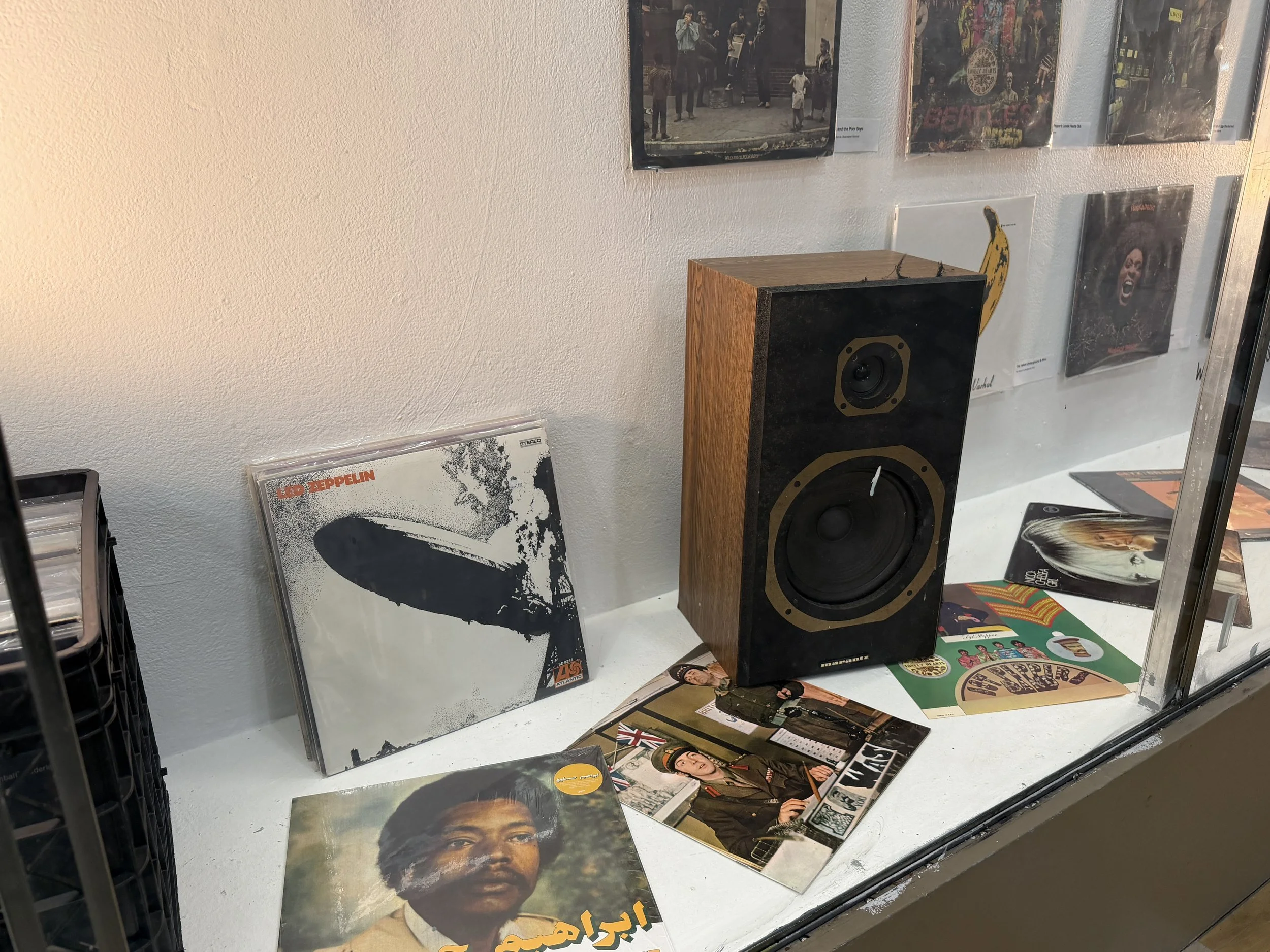
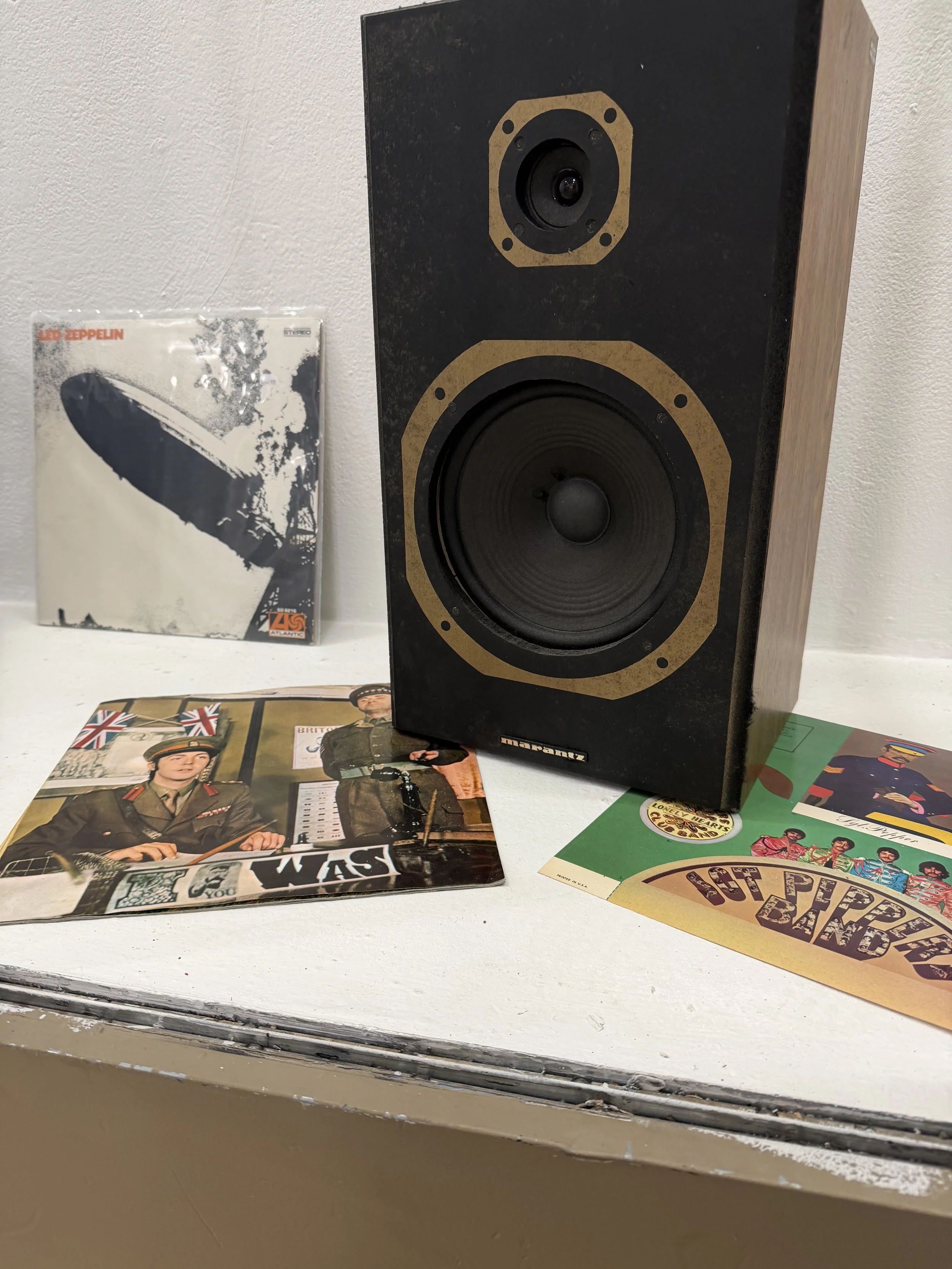
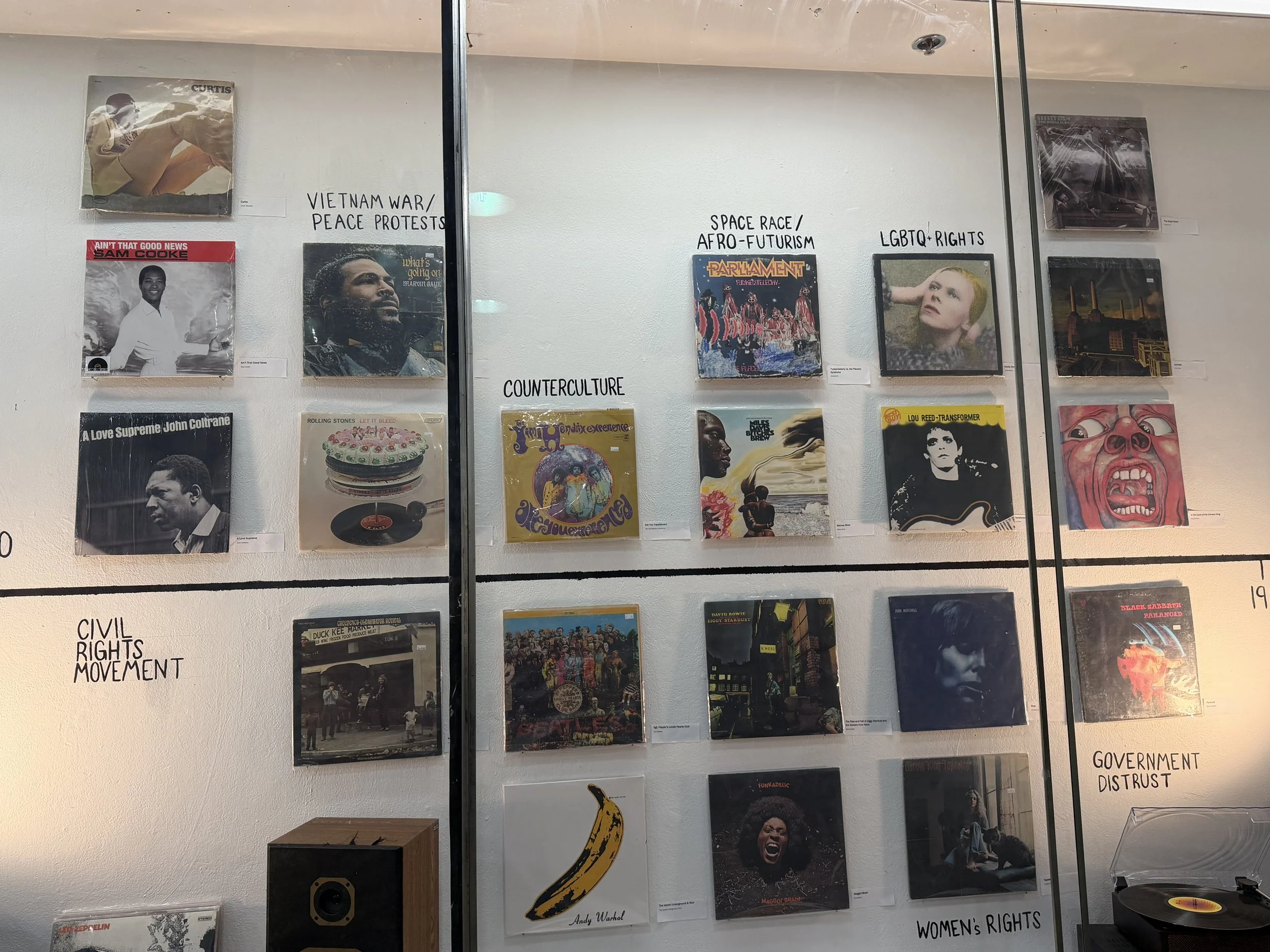
While the warm crackle of vinyl evokes a sense of nostalgia through its warm sounds and analog experience, these records emerged during a period of intense social upheaval. Rhythms of Protest and Change is set in a cozy listening environment to manifest this nostalgia while also providing a contrasting opportunity to analyze the albums' identities as declarations of change. The exhibition unites prominent yet diverse records as physical representations of various movements and themes across the time period, such as civil rights protests, the Vietnam war, counterculture ideals, the space race, LGBTQ+ rights, women’s rights, and government distrust. The displayed vinyls, spanning genres of rock, soul, jazz, and folk, redefined music's capacity as a medium of social transformation.
While curating the exhibition, we uncovered the distinct approach each individual artist utilized to convey widely similar themes. For example, Curtis Mayfield blends sweet vocals with emotive brass instrumentals, while Black Sabbath elects to combine deep, fuzzy guitars with heavy drums. Parliament uses funky grooves layered with anthemic vocals, contrasting Joni Mitchell’s stripped style of poetic vocals and soft guitar. And we can hear how The Rolling Stones embrace a rough style with folk elements and how Steely Dan uses an incredibly precise method to reconstruct various elements of jazz. Each record serves as its own unique and experimental form of protest that goes beyond the facade of its subject matter.
In our current time of political division and social reckoning, our exhibition presents a call to action through historical perspective. The struggles documented in each record have not been resolved by time, but rather recycled in ours. As we bear witness to remodeled attacks on voting rights, reproductive freedom, and the oppression of marginalized communities, music reminds us that resistance has always required both courage and creativity. These artists demonstrate that art is not a luxury in times of crisis, but rather a necessity. Their instruments act as a guide to unite communities while their melodies proclaim their criticisms of oppressive machines and imagine brighter futures. Change has always originated from active engagement, and music has remained a major gear in the machine of protest and change.
Claire Zdroik & Calvin Rahn
University of Wisconsin - Madison